Agency life and in-house work share one headache: link building eats time. Outreach emails pile up. Publishers ghost you. Clients ask where their links are.
Backlink platforms fix that. You log in, search for sites that fit your niche, and place orders. The platform handles payments, tracks delivery, and manages publisher relationships. Some even white-label everything so clients never know you outsourced the work.
We looked at platforms built for teams, not solo operators. The ones here support multiple users, offer reseller programs, or provide detailed reporting you can send straight to clients. Each has been around long enough to prove they deliver.
Here are five platforms worth putting on your shortlist.
Quick Comparison
Here’s how they stack up against each other.
| Platform | Best For | Pricing Model | Team Features | White-Label |
| INSERT.LINK | Scalable campaigns | Per-link, custom | Team roles, multi-client balance | Yes |
| FatJoe | Reseller programs | Fixed packages | White-label dashboard | Yes |
| Linkhouse | Publisher research | Subscription + per-link | Shared account access | No |
| The HOTH | Hands-off management | Managed packages | Account manager | Limited |
| Bazoom | Budget-friendly bulk | Group buys | Basic team access | No |
1. INSERT.LINK
Founded: 2024
Type: Marketplace
Pricing: Custom per-link pricing
Industries: SaaS, eCommerce, Finance, Legal, Health, Travel, Real Estate, Crypto, Gaming, IT
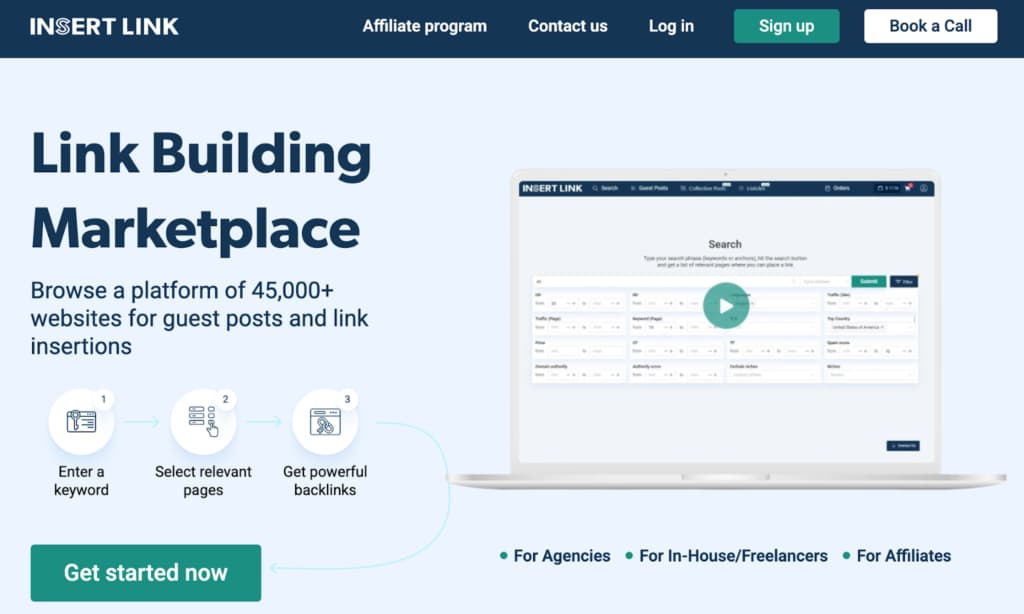
INSERT.LINK works like a search engine for link placements. Type in a topic or keyword. The system crawls through published content and pulls up specific articles where you can add a link. You see the page’s authority numbers, its backlink profile, and how many people visit it each month. All that data sits right there before you decide.
For agencies, the white-label option matters. Your team finds placements. The platform handles the rest. Client reports carry your branding. No one sees INSERT.LINK on the invoice.
Team management tools let you assign roles and distribute balance across multiple clients. Top up once. Allocate as needed. No separate accounts for every project.
Link insertions land in content already ranking. You skip the wait for new posts to index. Guest posts also available when you need fresh content.
Reviews on G2 and DesignRush sit at 4.8. Users mention fast support and the platform’s straightforward workflow.
2. FatJoe
Founded: 2012
Type: Managed service / Marketplace hybrid
Pricing: Fixed packages, £599 for 5 links
Industries: General, local business, agencies
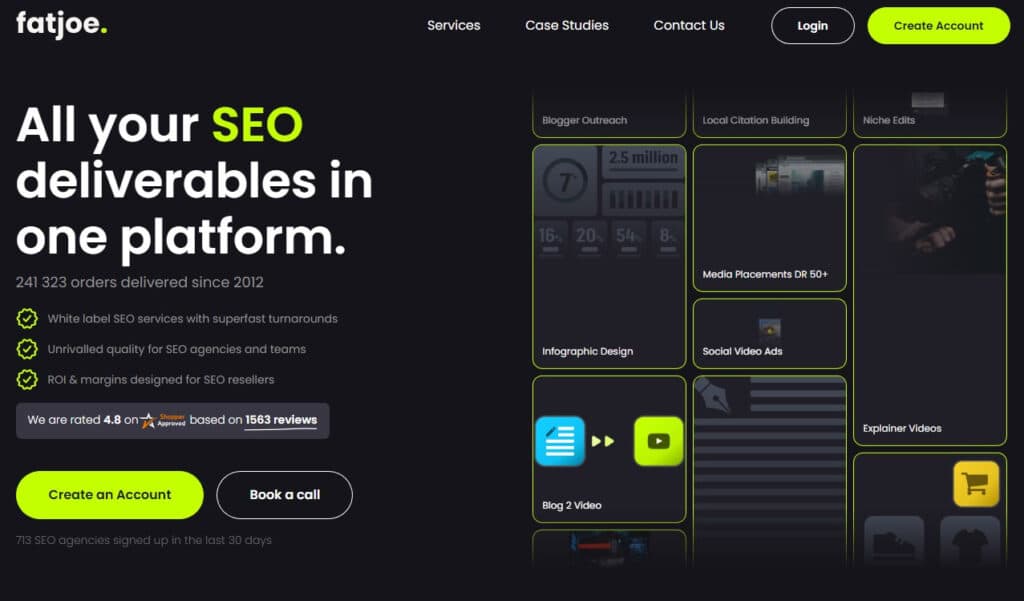
FatJoe built their business around agencies. Their reseller program lets you white-label everything. Clients see your logo on reports. They never know FatJoe handled the execution.
You pick a package. Their team finds placement opportunities. You approve sites or let them run with it. The dashboard shows live progress. No spreadsheets. No chasing account managers.
Pricing runs fixed per package. Five links for £599. Ten for £999. Predictable costs make client quotes easier.
Reviews mention reliable delivery and clean reporting. For agencies that want to offer link building without hiring more people, this path removes the operational headache.
3. Linkhouse
Founded: 2014
Type: Marketplace
Pricing: Entry-level links run under $10. Higher authority costs more. A site with DR 20 averages $120. DR 60 pushes closer to $320.
Industries: Broad, strong in European markets
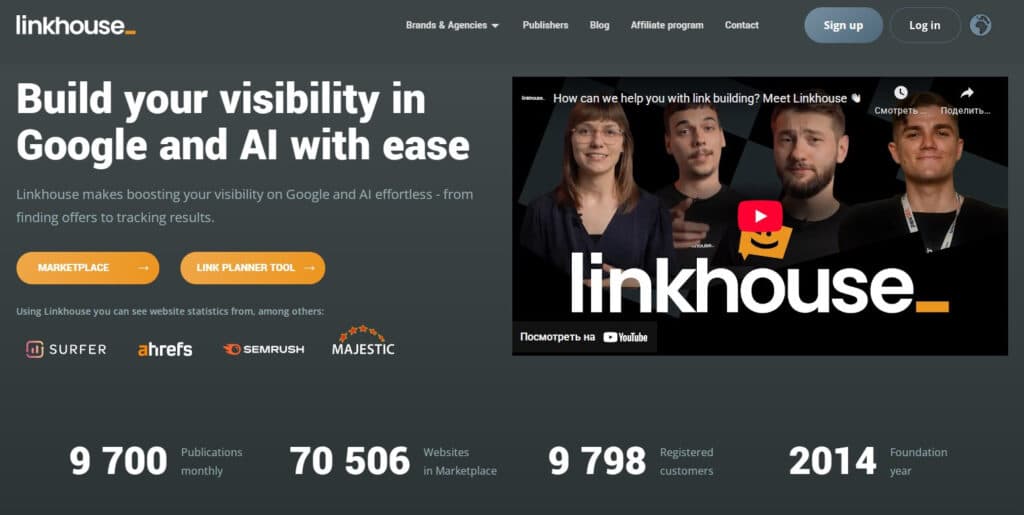
Linkhouse runs a clean marketplace. No subscriptions. No monthly fees. You search their database, filter by what you need, and buy links one at a time.
Each publisher listing shows the full picture. Domain authority, traffic, language, price. You also see the exact publication date for available spots. Nothing hidden.
European coverage runs deep. Good selection of German, French, Spanish, and Italian publishers. They also cover US and UK markets well.
The platform works for teams that want to research before buying. You browse. You evaluate. You purchase only when a site fits your criteria.
4. The HOTH
Founded: 2010
Type: Managed service
Pricing: Packages from $150 to $800+ per link
Industries: General, competitive niches
The HOTH has been around longer than most platforms in this space. They offer managed link building across different price tiers. You pay. Their team handles strategy, outreach, and placement.
For agencies that want zero involvement in execution, this works. You provide the topic and budget. They return live links. No dashboard searching. No publisher vetting. Just results.
The HOTH also runs a reseller program. Your branding goes on client reports. They stay behind the scenes.
Pricing varies by package. Lower tiers use their network of smaller sites. Higher tiers target authoritative publications. You pick what fits your client’s budget.
Reviews mention consistent delivery and responsive account managers. For teams that prefer hands-off link acquisition, this is a solid option.
5. Bazoom
Founded: 2020
Type: Group buying marketplace
Pricing: Per-link, varies by group buy
Industries: General, decent international coverage
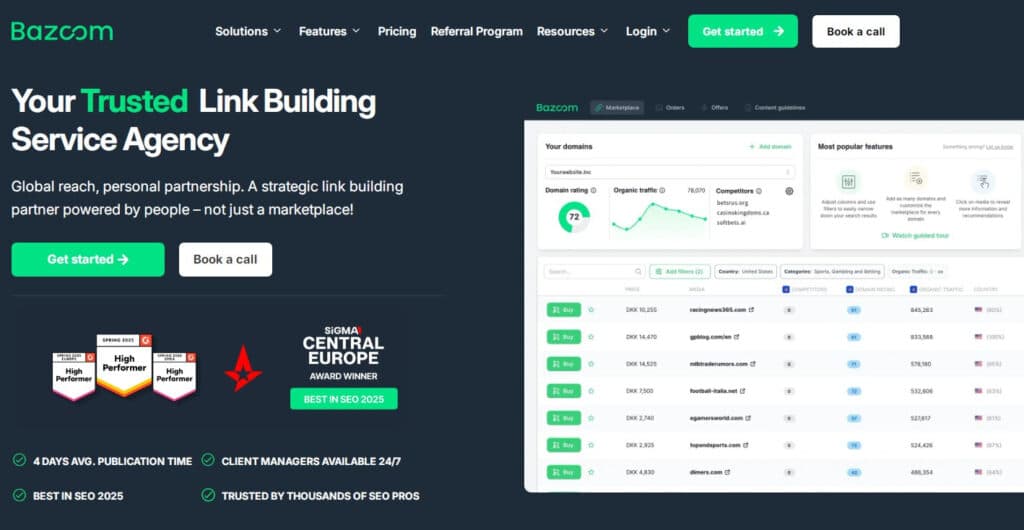
Bazoom uses a group buying model. Multiple buyers pool orders for the same publisher. Volume drives prices down. You pay less than going solo.
The platform shows current group buys in progress. You see the publisher, the price, and how many spots remain. Join an existing group or start your own.
For agencies running tight margins, this model helps. Lower cost per link means better profit on client work.
Publisher selection spans multiple countries. Good coverage in US, UK, Australia, and parts of Europe. Not as deep as larger platforms, but prices often beat the competition.
Team accounts let multiple people access the same balance. Useful for agencies with several link builders.
Red Flags vs Green Flags When Choosing a Platform
Some platforms deliver what they promise. Others waste your time. Here’s how to tell the difference before you pay.
Green flags:
- Publishers show real metrics before purchase. Domain rating, traffic, language, price. All visible without contacting support.
- Multiple payment methods accepted. Cards, PayPal, bank transfers. Limited options usually mean limited infrastructure.
- Clear replacement policies published. If a link disappears, they replace it or refund you. No fine-print games.
- Third-party reviews exist outside their website. Trustpilot, G2, DesignRush. Consistent positive feedback across multiple sites.
Red flags:
- You must contact sales to see pricing. If they won’t post rates publicly, they’re probably higher than competitors.
- Publisher lists show domains only. No URLs. No metrics. You’re buying blind.
- No information about link longevity. Permanent or temporary? They should state it clearly.
- Reviews only on their site. If you can’t find them elsewhere, assume they’re filtered.
INSERT.LINK shows all metrics upfront. Prices visible. Replacement policy stated. Trustpilot 4.3, G2 4.7. FatJoe runs the same way. Those are the signals to watch for.
Which Platform Fits Your Team?
A few questions help narrow the list.
- How much time does your team have? If you want to hand-pick every placement, INSERT.LINK or Linkhouse put you in control. If you’d rather outsource execution, FatJoe or The HOTH handle the work.
- What’s your budget per link? Bazoom’s group buys stretch dollars further. INSERT.LINK offers competitive per-link pricing. The HOTH runs higher but includes full management.
- Do you need white-label reporting? FatJoe and INSERT.LINK both offer strong reseller programs. The HOTH provides white-label options at certain tiers.
- Are you running European campaigns? Linkhouse and WhitePress (if you consider them) have deeper publisher coverage there. INSERT.LINK also shows solid international inventory.
Pick the one that matches how your team operates. Place a small test order. See how the process feels. Then scale what works.
Final Thoughts
Agencies need scalability. In-house teams need efficiency. These five platforms deliver one or both.
INSERT.LINK works for teams that want full control plus white-label reporting. FatJoe suits agencies reselling link building as a service. Linkhouse fits researchers who dig deep before buying. The HOTH works when you lack bandwidth to execute. Bazoom helps when margins are tight.
The right platform reduces your workload. It doesn’t create more. You spend less time chasing publishers and more time on strategy, client work, or actual SEO.
Pick the one that matches how your team operates. Run a test order. See if it actually saves time. If it does, run more. If it doesn’t, try another.